Caring for home medical equipment
Equipment that is cleaned and checked regularly lasts longer and fails less often at the worst moment.
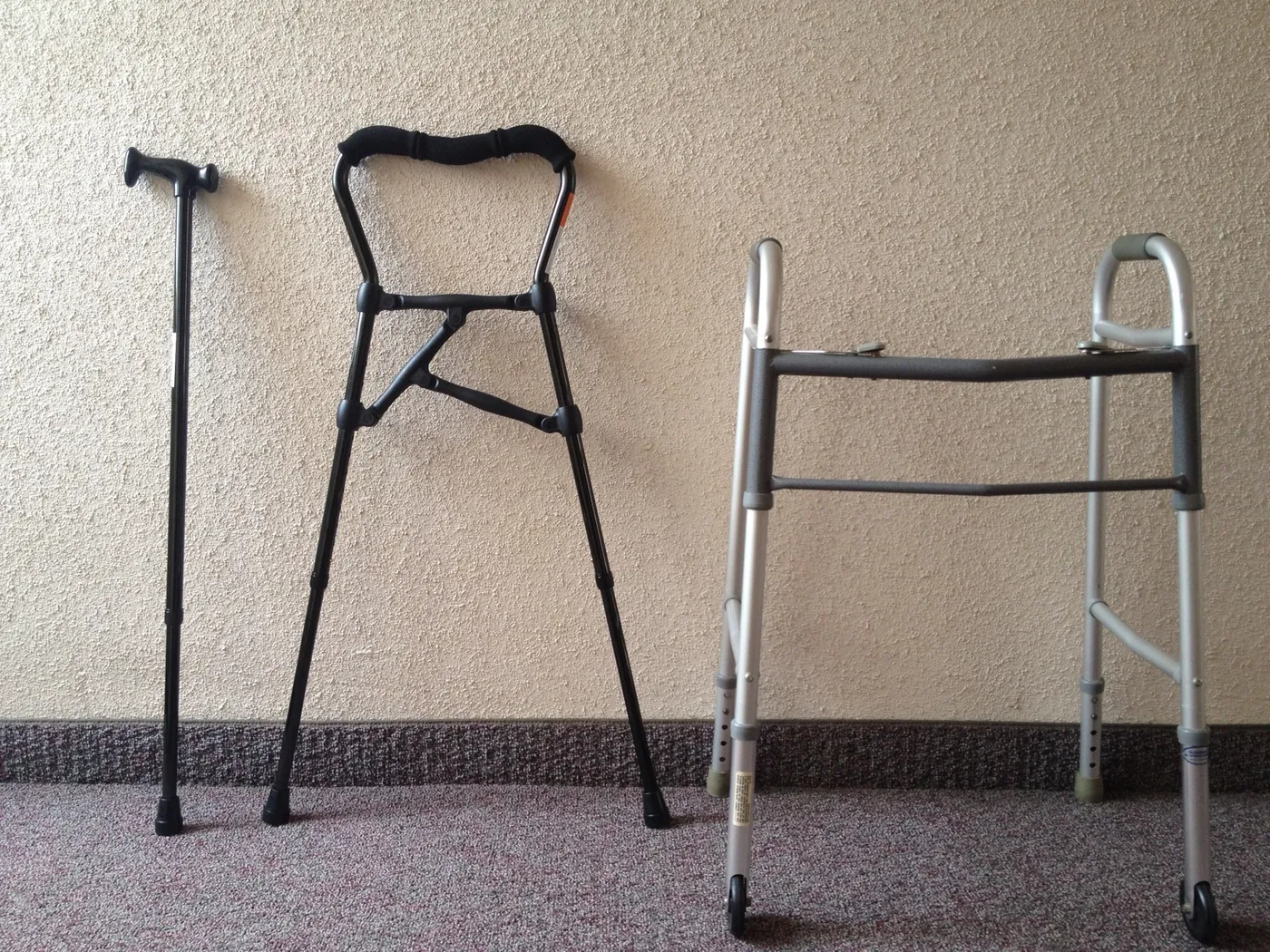
Home medical equipment is used every day, often by people who depend on it, and much of it wears gradually so that problems are not noticed until something gives way. A few minutes of routine care catches most issues early. Always follow the manufacturer's instructions for your specific equipment; this page describes the general idea.
A weekly look
- Rubber tips and feet: cracks, smooth patches or wear through to the metal mean they need replacing.
- Height pins and locking buttons: they should click fully into place.
- Brakes: rollator and wheelchair brakes should hold firmly.
- Wheels and castors: they should turn freely without wobbling and be clear of hair and thread.
- Frames: look for bends, cracks and loose joints.
Cleaning
Most frames can be wiped with warm soapy water and dried thoroughly. Hand grips, rails and controls are touched constantly and are worth cleaning often, especially when someone in the house is unwell. Avoid harsh chemicals that can damage plastics and rubber unless the manual says they are suitable. Cushions and slings have their own washing instructions; follow them closely.
Electrical equipment
For electric beds, lifts, stairlifts and powered chairs, check cables for damage, keep liquids away from controls, and charge batteries as the manual describes. Do not attempt internal repairs. Many powered items need regular professional servicing; keep a note of when it is due.
Shared and loaned equipment
Equipment that has been used by someone else should be cleaned before use and checked carefully. If it was loaned by a health service or charity, ask how they want it cleaned and returned, and report faults to them rather than fixing them yourself.
When to stop using it
If a frame is bent, a brake no longer holds, a sling is frayed or a lift behaves unexpectedly, stop using it and get it inspected. A temporary inconvenience is better than a fall.
Keep the paperwork
Store manuals, servicing records and supplier contact details together, ideally in the household care binder. When something does go wrong, having the model details ready speeds up the repair. The glossary explains common terms.