Walkers and rollators, explained
Frames give more support than a cane. The differences between them come down to wheels, brakes and how you walk.
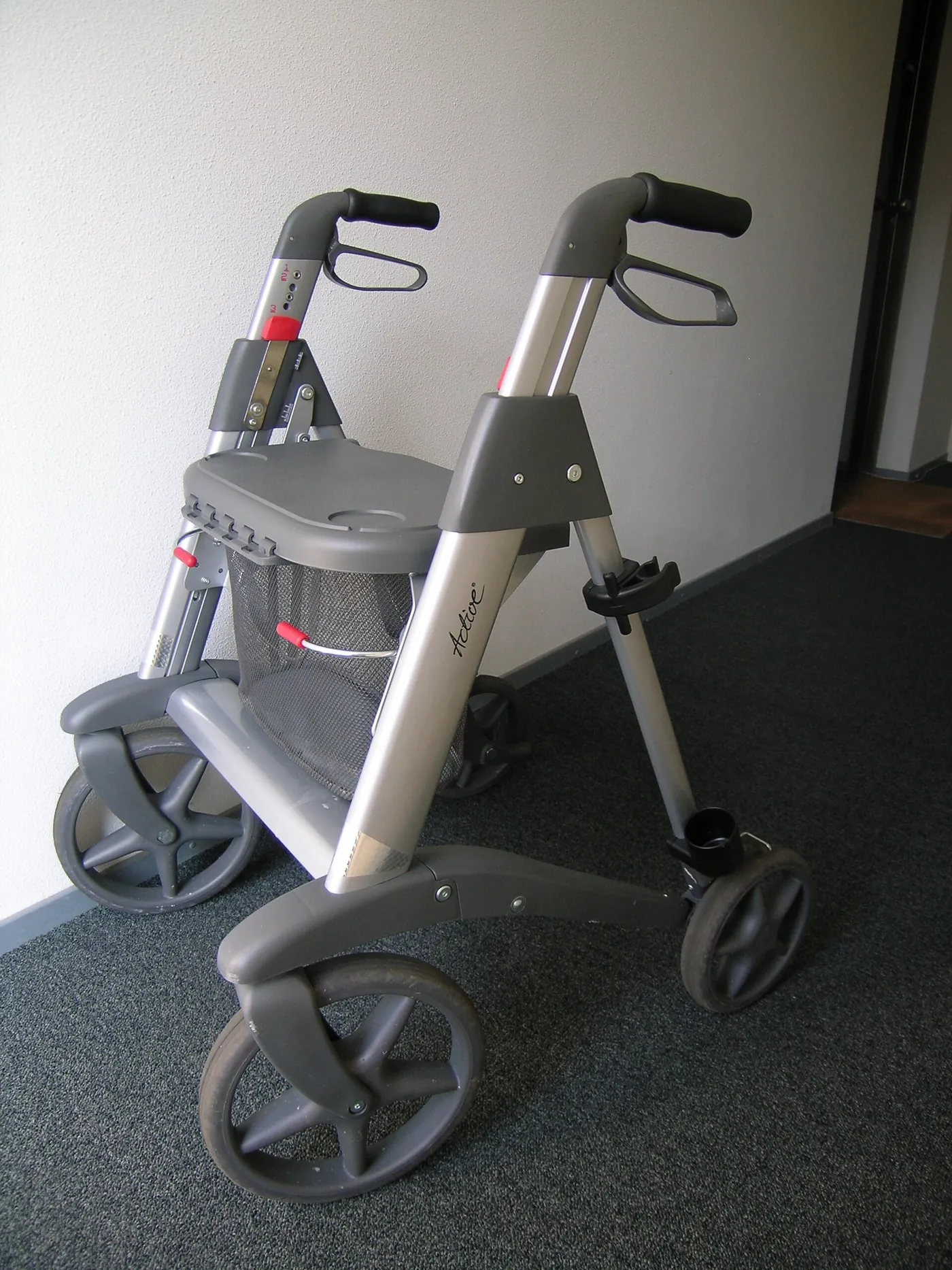
Walkers surround you on three sides and let both arms share the work of steadying the body. That makes them a common recommendation after surgery, during recovery from illness, or when balance is a long-term concern. The word covers several quite different designs, and choosing the wrong one can make walking harder rather than easier. Here is how the main types differ.
Standard walking frames
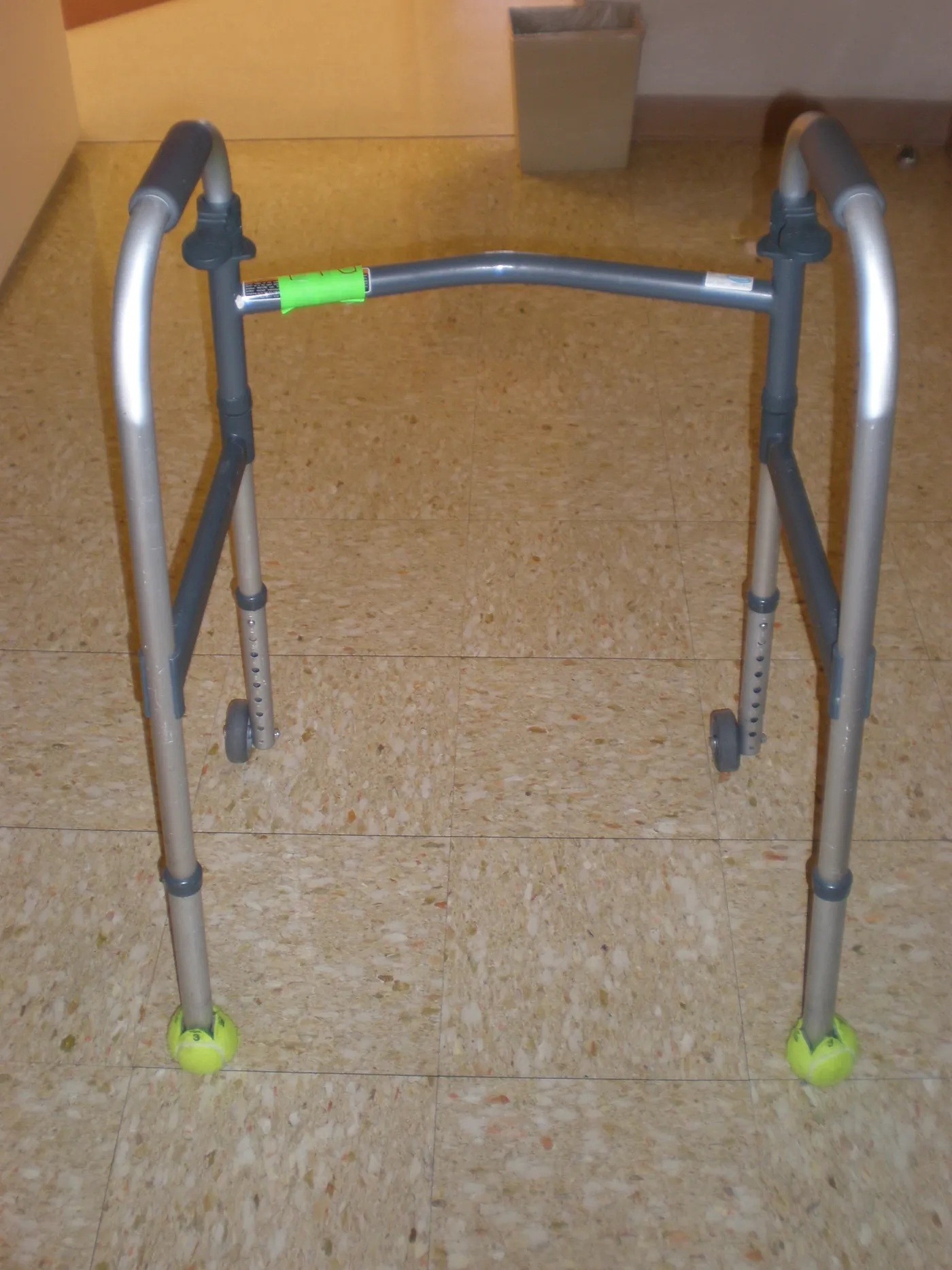
A standard frame has four rubber feet and no wheels. You lift it, place it ahead, and step into it. It gives the most stable support of any walker because it cannot roll away, but it is slow and takes some arm strength. Standard frames are often used early in recovery, or by people who need to put a lot of weight through their arms.
Two-wheeled walkers
Adding fixed wheels to the front legs lets the frame be pushed rather than lifted, while the rear legs, usually fitted with skis or gliders, provide friction so it does not run ahead. The result is a smoother, more natural walking pattern with much of the stability of a standard frame. Many people use this kind of walker at home for months.
Rollators
A rollator has three or four wheels, hand brakes and, on most four-wheel models, a seat. It suits people who can walk reasonably well but tire quickly or need a steady handhold, because it rolls freely and lets you stop and sit. It is not designed to bear heavy weight through the arms: if you push down hard on a rollator it can move. The seat is for resting while the rollator is still and braked, never for being pushed along.
Fit and adjustment
As with canes, the handles are usually set near wrist height when standing upright, so the elbows bend slightly. You should walk inside the frame, not behind it at arm's length; a frame held too far forward pulls the body into a stoop. Brakes on a rollator should engage firmly with a reasonable squeeze and lock fully in the parking position. A therapist can check all of this in a few minutes.
At home
Walkers need space. Measure doorways and the gap between furniture, move loose rugs, and think about how you will carry a drink or a plate; trays and bags made for walkers keep hands free. Indoors, a narrower frame may suit better than a large outdoor rollator, and some households end up with one of each.
Outdoors
Larger wheels roll more easily over cracks, kerbs and gravel. Brakes, tyres and folding catches deserve a quick check before each trip. In winter, snow and slush clog small wheels quickly; see the note on getting mobility aids ready for winter.