Home health monitors, explained
Home monitors are useful when readings are taken carefully and shared with the people looking after your health.

Many households now keep a few health monitors at home: a digital thermometer, a blood pressure monitor, sometimes others recommended by a clinician. Used well, they give useful information between appointments. Used carelessly, they produce numbers that worry people unnecessarily or reassure them falsely. This page covers general good practice only; what a reading means for you, and what to do about it, is a conversation for your doctor or nurse.
Blood pressure monitors
Upper-arm monitors with an inflatable cuff are the type most often suggested for home use. Wrist monitors exist but are more sensitive to how the arm is positioned. The single most important factor is cuff size: a cuff that is too small or too large for the arm gives misleading readings. Ask a pharmacist or nurse to check the fit, and consider asking whether your monitor model has been tested for accuracy.
Taking a reading
- Sit quietly for a few minutes first, back supported and feet flat on the floor.
- Rest the arm on a table so the cuff is roughly at heart level.
- Put the cuff on bare skin, not over a sleeve.
- Avoid talking during the reading.
- Follow the schedule your clinician suggests and write down the results with the date and time.
Thermometers
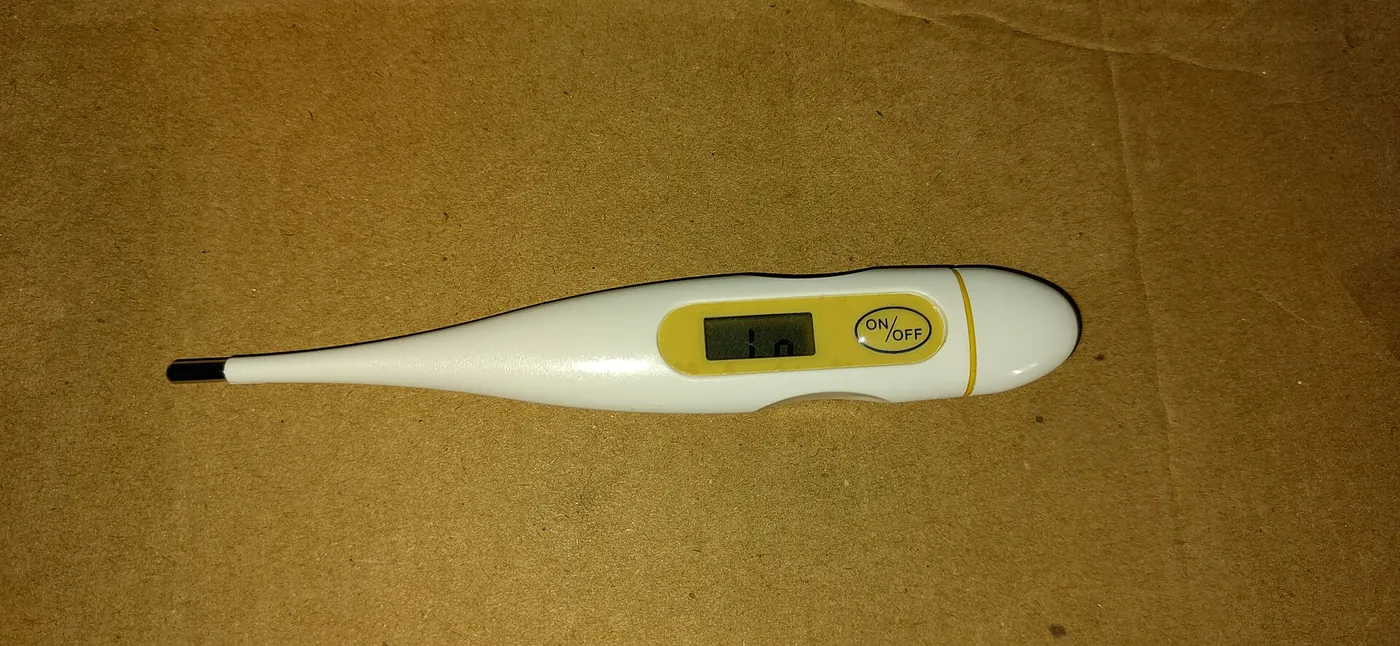
Digital thermometers are quick and widely used. Different types measure in different places, such as the mouth, ear, forehead or armpit, and readings vary a little between sites, so use the same type consistently and follow its instructions. Clean it between uses, especially when it is shared.
Keeping a record
Single readings vary naturally. A simple log, on paper or in a phone, of the date, time and result is more useful to a clinician than remembered numbers. Bring the log, and the device if asked, to appointments.
What monitors cannot do
A monitor measures; it does not diagnose. Never start, stop or change any medicine based on a home reading without speaking to a professional. If you feel unwell, trust symptoms over numbers and seek help: a normal reading does not rule out a problem. If you think it is an emergency, call your local emergency number.
Care of the devices
Replace batteries before they run out, store devices in their case, and check the expiry or recalibration guidance in the manual. See caring for equipment.